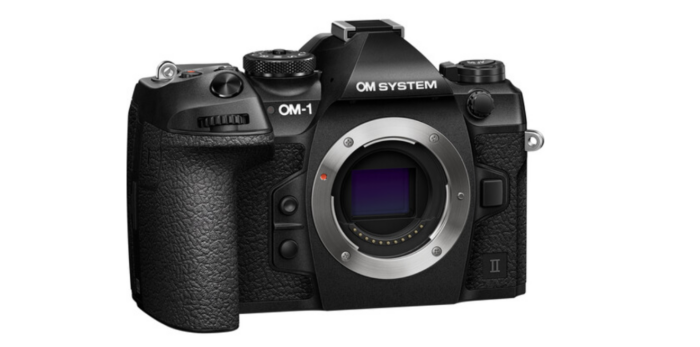
The new Astro variant has an infrared cut filter in front of the filter enabling 100% transmission of Hα wavelengths. This is perfect to capture nebulae emitting Hα light. The camera also has two new color profiles:
COLOR1 optimized for red nebulae
COLOR2 optimized for starry landscape photography
The camera also has a new Starry Sky AF and a Night vision mode. It also has C1 is set for stacking for astrophotography, C2 is for stacking a starry landscape, and C3 is for handheld shooting of a starry landscape.
The TG-7 INDUSTRY is a kit-exclusive variant of the black Tough TG-7 digital camera widely popular on adventure and job sites alike. Sold alongside the NY-TGV Super Adapter for standard microscope eyepieces, the full kit allows users to take 12MP resolution images in examination, research, and testing applications with a binocular stereoscopic microscope.
The camera facilitates the use of large monitors for observation of microscope images, along with remote capture with the optional RM-WR2 Wireless Remote Control. The INDUSTRY also features two new custom settings on the mode dial, a Focus Stacking Mode for compositing images taken at multiple focus points and a Microscope Adapter mode for use attached to a stereoscopic microscope.
Panasonic has officially registered two new cameras in China (Source: E8M on Weibo). According to the few details we got we can expect to get one nee entry level and one new high end camera. There is no way to know from the papers if one of these cameras is MFT or not. This is all we know:
The entry level camera: This could be a Lumix ZS99 successor or another fixed lens affordable compact camera. On paper also the G97 successor could be a possibility but I have not heard anything about this yet.
The High End camera: Here we have a couple more options in the L-mount range. The GH8 is not coming in 2026 so the only MFT camera I can see coming is a new GM/GF kind of camera or a G9III. But again, I got no indication yet that a MFT camera will be announced soon.
When will those be announced? It takes a maximum of 3-4 months for a newly registered camera to be released on the market. Therefore, the announcement will be made between the end of February and May.
The Luxury vs. Bargain Metaphor: Shooting with the Hasselblad is compared to a high-end designer store experience, while the Olympus EPL6 is like hunting for treasures in a “bargain bin” at TK Maxx.
Shared Aspect Ratio: Despite the massive price gap, both cameras share a native 4×3 sensor aspect ratio, providing a similar “boxy” composition.
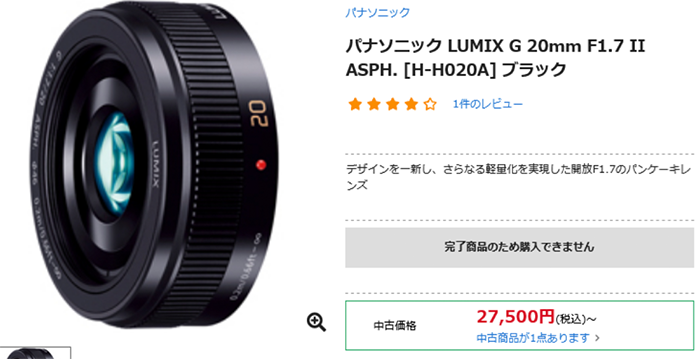
Focal Length Parity: To keep the comparison fair, Holden uses a 55mm f/2.5 on the Hasselblad (43mm full-frame equivalent) and a 20mm f/1.7 on the Olympus (40mm full-frame equivalent).
Resolution Contrast:
The 16MP Olympus is described as the “Goldilocks” resolution—sufficient for social media and cropping without exhausting storage.
The 100MP Hasselblad allows for extreme cropping and incredible texture detail but results in “ludicrous” file sizes.
Waist-Level Viewfinder: Both cameras allow for waist-level shooting via tilting screens. However, the Hasselblad’s screen is significantly larger, brighter, and features a superior touchscreen interface.
Minimalist Controls: Neither camera features traditional dual dials. The Hasselblad uses a unique dial wrapping around the shutter button, while the Olympus relies on a rear thumb dial and D-pad.
Shutter Mechanics: The Hasselblad utilizes a silent, sophisticated leaf shutter, whereas the Olympus EPL6 uses a loud, “clunky” mechanical shutter.
Lens Performance: The Hasselblad 55mm lens is fast, silent, and features a manual focus clutch. The Lumix 20mm on the Olympus is reliable but notably slower and noisier due to its older design.
Medium Format Rendering: The Hasselblad provides an incredibly shallow depth of field that maintains high detail even when stopped down to f/4.8, a look that is difficult to replicate on smaller sensors.
Color Science: Hasselblad’s “Natural Colour Solution” is praised for producing excellent out-of-camera results that require minimal raw editing.
Modularity and Heritage: The Hasselblad is noted for its modular design, allowing it to be used as a digital back for classic film cameras, and its “NASA heritage” legacy.
Philosophical Conclusion: Holden advises new photographers to buy only what they can afford (including using a phone), but notes that the Hasselblad makes sense for those wanting “the best of the best” for studio, portrait, or high-end travel work.